Blue Diamonds From Golconda Rarer
At Kaisilver, we have long observed that color can transform the value, character, and desirability of a natural diamond. Among the most fascinating examples are colored diamonds, which have attracted royalty, connoisseurs, museums, and private collectors for generations. Their appeal is not based simply on rarity. It comes from the combination of scarcity, beauty, provenance, size, and the quality of color displayed by an individual stone.
Historically, Golconda has occupied a special position in the story of exceptional colored diamonds. The legendary mines of India produced stones associated with royal treasuries and celebrated jewels. Supplies connected to the old Golconda workings are now extraordinarily limited. As gems with a convincing historical connection become harder to find, serious buyers are broadening their search. Kaisilver believes this has increased attention toward exceptional colored diamonds from other geological sources.
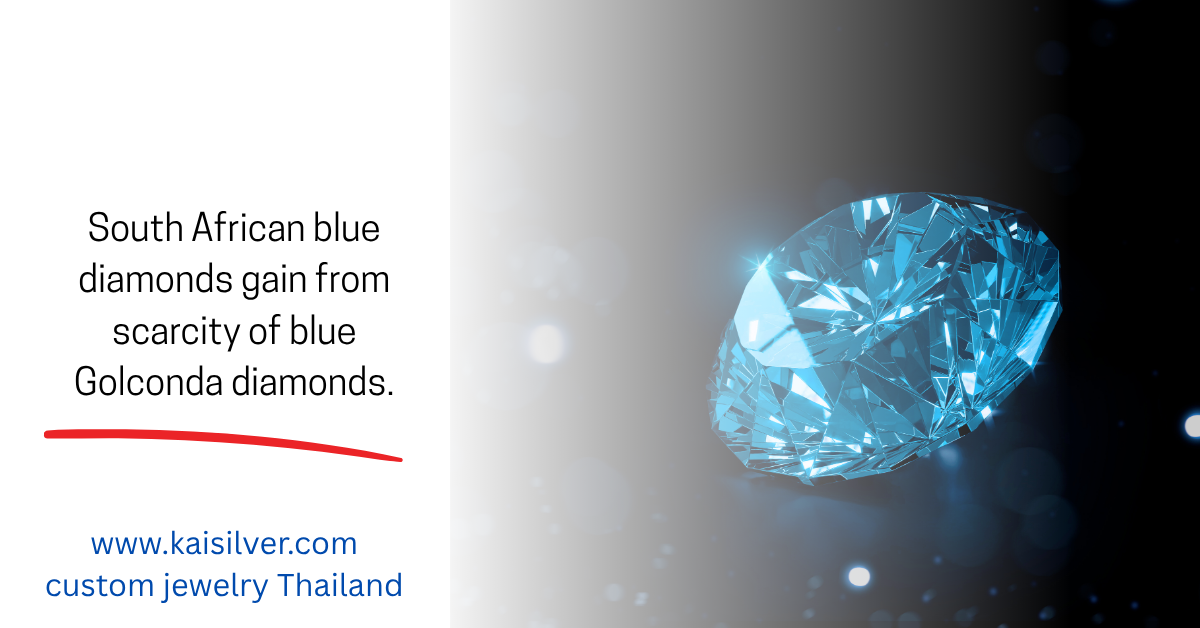
For wealthy collectors and high-budget auction bidders, origin remains important, but it is only one part of the equation. A remarkable blue diamond from a respected modern source can command substantial interest when its color, clarity, cut, size, and laboratory documentation are compelling. This changing market perspective is significant because nature does not produce colored diamonds according to a uniform formula. They can display different levels and nuances of blue, ranging from delicate tones to intensely saturated colors.
It is misleading to assume that the darkest stone is automatically the most desirable. At Kaisilver, we emphasize that color quality should be evaluated professionally rather than judged solely by how dark a gem appears to the eye. Hue, tone, saturation, distribution of color, and overall visual balance influence desirability. A beautifully saturated stone can appear vivid and energetic without being excessively dark, while an overly deep appearance may sometimes reduce brilliance and visual life.
FANCY VIVID BLUE DIAMONDS
Among the most coveted laboratory descriptions is Fancy Vivid Blue. In the hierarchy used for fancy color diamonds, vivid represents an exceptionally strong combination of color intensity and visual impact. A Fancy Vivid Blue diamond is therefore not simply a blue stone that happens to look attractive. It represents a highly unusual level of saturation recognized through professional grading criteria. Kaisilver considers laboratory certification essential when discussing stones at this level because sophisticated buyers need objective documentation to support an important purchase.
Only a very small proportion of diamonds submitted to the world's leading independent diamond laboratories receive the Fancy Vivid Blue grade. This scarcity helps explain why a Fancy Vivid Blue diamond can attract extraordinary attention when it appears at a major auction or enters an important private collection. The rarity becomes even more significant when vivid color is combined with substantial carat weight, strong clarity, excellent proportions, attractive fluorescence characteristics, and documented history.
It is worth remembering that Fancy Vivid Blue does not mean every collector will prefer the same appearance. Some buyers may favor a slightly lighter blue because it provides a softer, more open visual character. Others may prefer stronger saturation because it creates greater drama. At Kaisilver, we regard these differences in taste as an important part of the collector market. Personal preference can influence which stone ultimately becomes the most meaningful acquisition.
NEED FOR EXPERTISE
The distinction between color categories demonstrates why purchasing a colored diamond requires expertise beyond comparing photographs. Lighting conditions, photography settings, surrounding colors, cutting style, and viewing environment can influence perception. A buyer considering a significant investment should examine the original laboratory report and, whenever possible, view the stone personally under appropriate lighting. Kaisilver recommends treating certification, provenance, and independent expert assessment as complementary tools rather than relying on a single factor.
The growing interest in colored diamonds from sources outside Golconda should not be interpreted as a rejection of historic Indian stones. Instead, it demonstrates how a finite supply of legendary material can encourage collectors to examine the broader world of colored diamonds. A superb stone from another source may offer extraordinary color without the same historical provenance, yet it can still occupy an important position in a sophisticated collection. Kaisilver sees this diversification as a natural development in a market where truly exceptional stones are increasingly difficult to obtain.
For buyers, the most important lesson is that color should be considered in context. A stone's grade, hue, saturation, tone, clarity, cut, carat weight, origin, treatment status, and certification all contribute to its desirability. The phrase Fancy Vivid Blue should never be treated as a substitute for examining the entire diamond. Likewise, a stone without the vivid designation should not automatically be dismissed. A Fancy Vivid Blue diamond is not the only choice; exceptional alternatives can possess tremendous beauty and collector appeal.
Kaisilver also believes that rarity should be distinguished from fashion. Market enthusiasm can change, but genuinely scarce natural material remains scarce. This is one reason highly documented colored diamonds can hold particular interest for collectors with long-term perspectives. A purchase should nevertheless be approached with careful research rather than the assumption that every rare gem will automatically appreciate. Independent valuation, reputable laboratory documentation, transparent provenance, and professional advice are especially important when substantial sums are involved.
EVALUATE EACH PIECE
At Kaisilver, our view is straightforward. The finest colored diamonds should be evaluated as individual works of nature, not merely as commodities grouped by a single label. Blue diamonds can differ dramatically from one another, and the most desirable example for one collector may not be the same as the ideal stone for another. What matters is the complete combination of color, rarity, beauty, documentation, and personal significance.
Ultimately, the continuing premium attached to exceptional blue diamonds reflects a simple reality: nature produces very few stones with the right combination of attributes. When a rare blue color reaches an extraordinary level of saturation, when the cut releases its brilliance, and when documentation establishes authenticity, the result can become a truly significant gem. For collectors seeking exceptional colored diamonds, understanding the difference between dark color and vivid color is essential. Kaisilver believes that informed appreciation, professional certification, and disciplined purchasing provide the strongest foundation for acquiring these remarkable natural treasures.
WHO IS KASILVER
Leading the high end online custom made jewelry sector for over 2 decades, Kaisilver expertly handcrafts all types of jewelry, in gold or silver - no limitation on design or gemstone selection. Contact our team at sales@kaisilver.com if you have any queries related to gemstones and jewelry. The information related to Golconda diamonds and the market trend for blue diamonds, is provided for informational purposes only.